The first thing you learn cooking over fire is that you are not in charge. You can build the fire, feed it, move the embers with a shovel, but you cannot hurry it. A larch log decides when it is ready. Your job is to be there when it is.
We cook this way at BRASA because the mountain asks us to. The valley gives us venison in October, char all winter, beets until the frost takes them. A gas flame will cook any of it at any time of year. An ember bed makes you wait for the right moment, and that waiting ends up in the food.
The fire is a clock
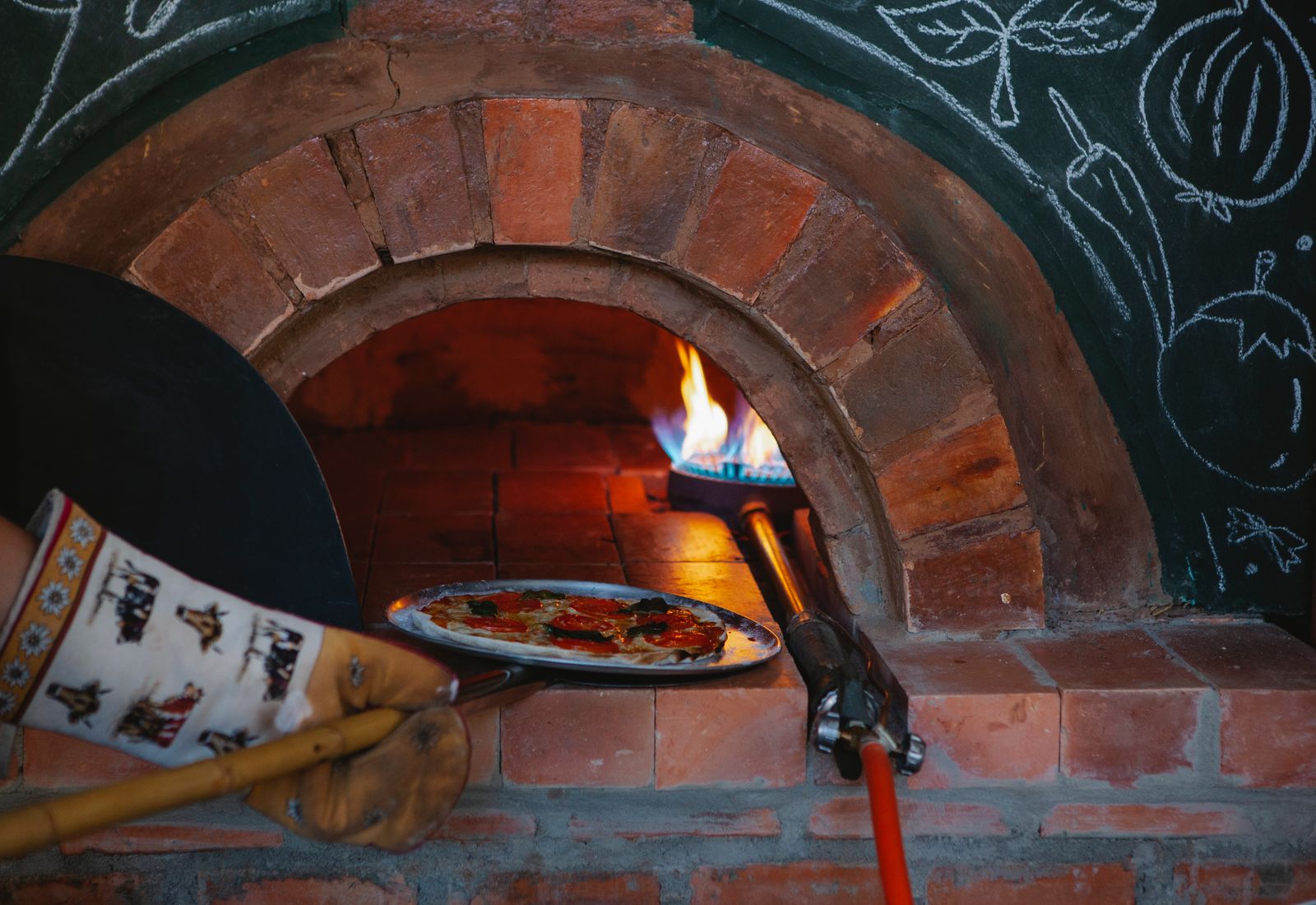
A wood oven is not one temperature. It is a landscape. At the mouth, where the flame still lives, it is fierce enough to blister a pepper in a minute. A hand's width deeper, the floor is calm and even, good for bread, better for a whole fish. At the back, the embers bank down and hold a low, steady heat that will cook a shoulder of venison for six hours without being asked.
So the kitchen day is not scheduled by the clock on the wall. It is scheduled by zones: what goes in at the mouth, what rests in the middle, what sleeps at the back. Cooks learn to read it the way farmers read weather.
“Fire is a slow ingredient. You can't rush it, you can only listen.” Elena Mori, Head Chef
Writing the menu at dawn
Every morning at six, two of us walk the meadow above the house with baskets and no list. What is ready is what we cook. In June that means elderflower, wild fennel and the first sour cherries from the old tree by the road. By October it is rosehips, chestnuts and the last of the herbs before the frost.
The menu is written on a chalkboard at seven, and it is usually wrong by noon. That is the point. If a dish cannot change when the valley changes its mind, it does not belong on the table.
- 06:40The forager leaves the door. Baskets, no list, one hour on the meadow.
- 11:00The fire is lit and left to settle into zones. The dough rests. The fish arrives.
- 19:30The table fills. Six courses, no choices, one long conversation.
What a whole char teaches you
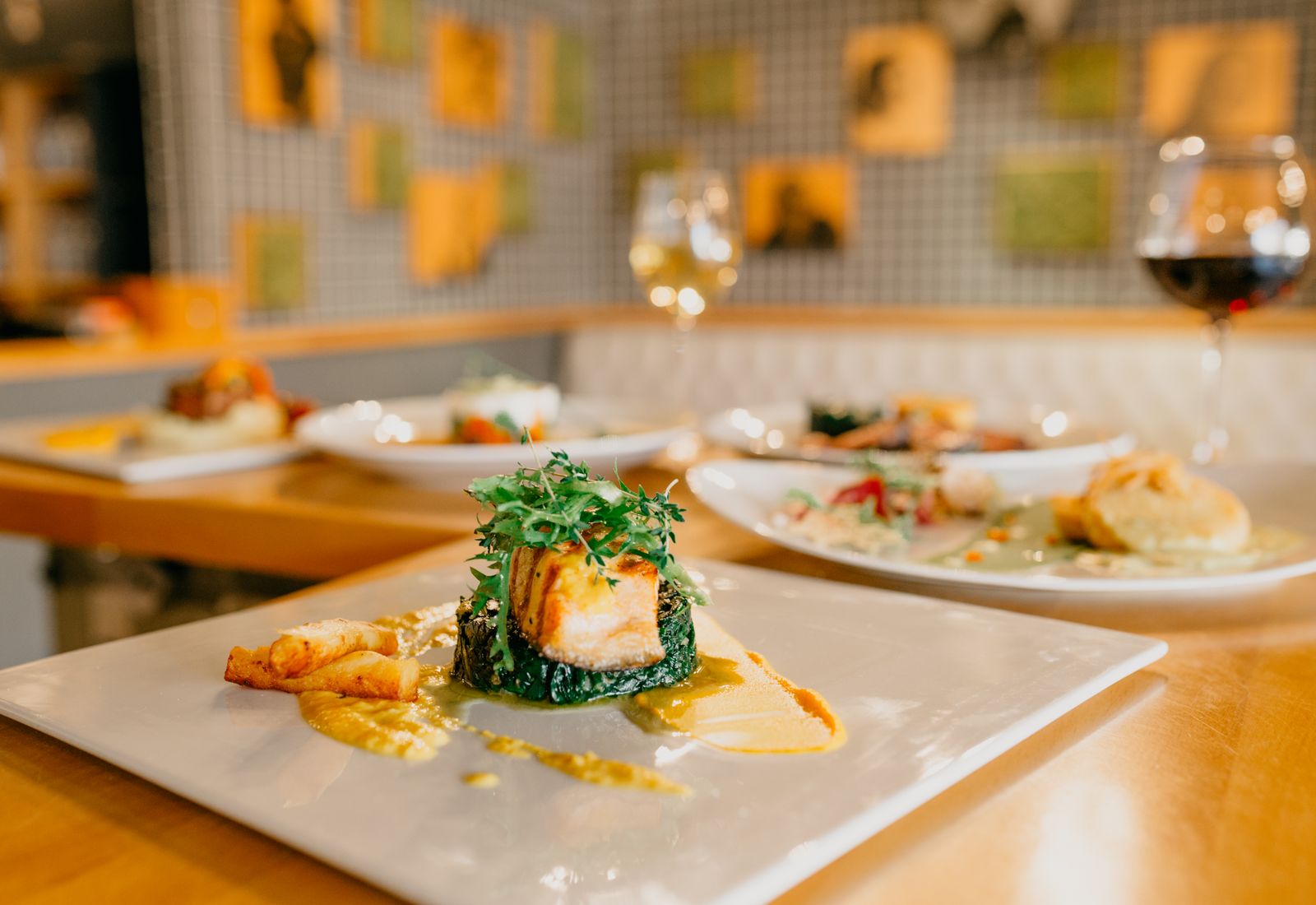
The first time you cook a whole char over embers, you will want to turn it too soon. You will want to check it. You will want to do something. The fish will forgive none of this. It needs the floor of the oven, a little patience, and a hand that knows when to leave things alone.
Guests ask sometimes whether cooking this way is romantic or simply inefficient. The honest answer is both. It takes longer. It is harder to plan. But it tastes like the place it came from, and that is not something a dial can give you.
If you are staying with us, come down at six and watch the fire being lit. We will give you coffee and put you to work. That is the whole secret, really: the slow table is not a menu. It is a way of paying attention.